
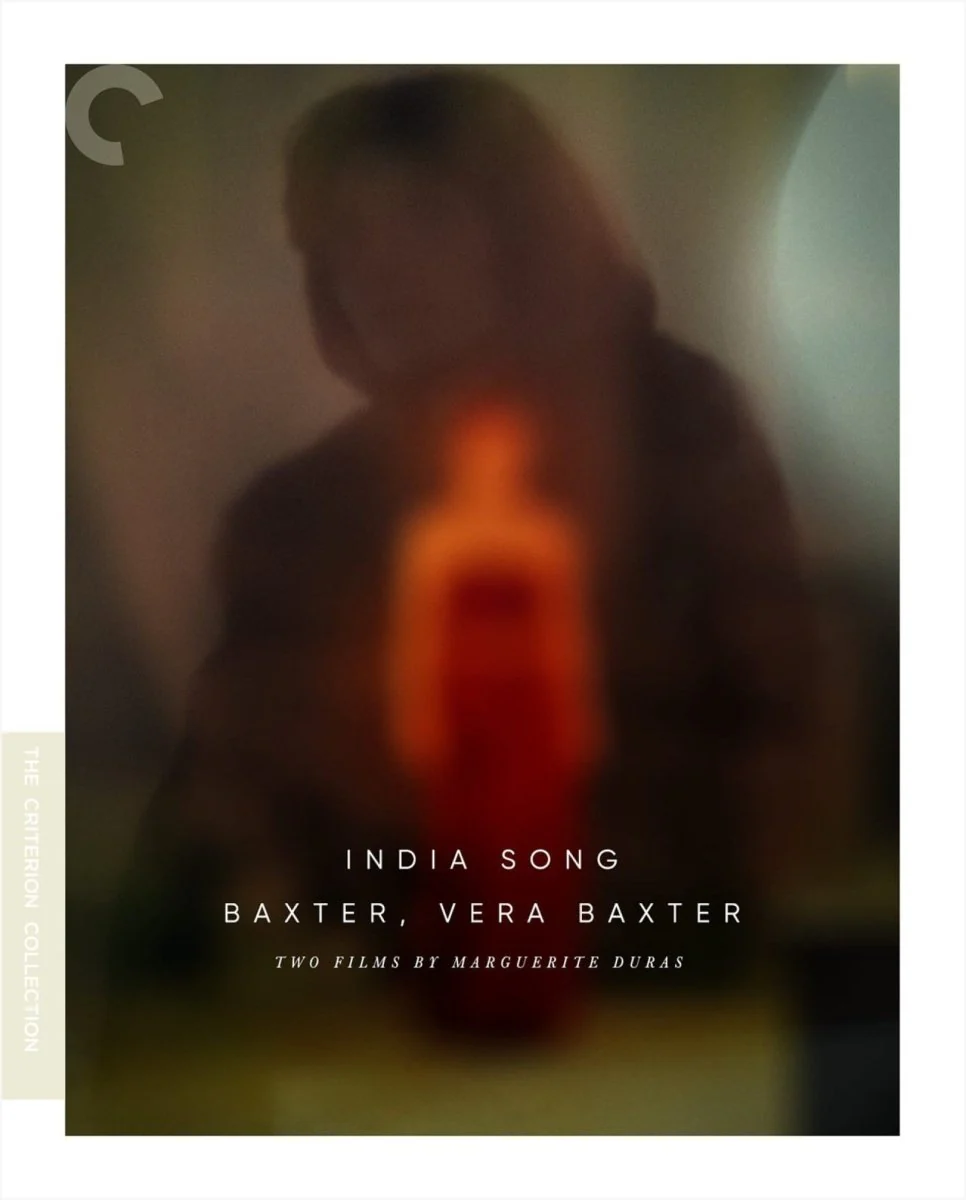
Two Films by Marguerite Duras (#1172)
Marguerite Duras had already established herself as one of the major figures of postwar French literature when she launched an equally fascinating and unclassifiable career in cinema, translating her elliptical, experimental style to the screen through an unprecedented fusion of hypnotic, highly stylized imagery and radically disjunctive sound. Boldly reimagining the possibilities of dialogue, music, silence, and architectural space, the tantalizing, sphinxlike evocations of soul-deep female malaise India Song and Baxter, Vera Baxter embody Duras’s singular multisensory approach, with each opening up new spaces for the expression of women’s interior worlds.
Baxter, Vera Baxter
Marguerite Duras reunited with India Song collaborators Delphine Seyrig and composer Carlos d’Alessio for this hypnotically unsettling journey into one woman’s existential emptiness. Ensconced in a sprawling rental villa, the world-weary Vera Baxter (Claudine Gabay) receives visits from two women, including a mysterious stranger (Seyrig) to whom she recounts a shocking story about her marriage, the way she lives, and the reasons for her malaise. Setting her languid images to d’Alessio’s incongruously breezy, endlessly looping score, Duras fashions a quietly shattering portrait of marriage as a kind of prison.
India Song
Marguerite Duras’s most celebrated work is a mesmerizing, almost incantatory experience with few stylistic precedents in the history of cinema. Within the insular walls of a lavish, decaying embassy in 1930s India, the French ambassador’s wife (Delphine Seyrig) staves off ennui through affairs with multiple men—with the overpowering torpor broken only by a startling eruption of madness. Setting her evocatively decadent visuals to a desynchronized chorus of disembodied voices that comment on and counterpoint the action, Duras creates a haunted-house movie unlike any other.
Marguerite Duras had already established herself as one of the major figures of postwar French literature when she launched an equally fascinating and unclassifiable career in cinema, translating her elliptical, experimental style to the screen through an unprecedented fusion of hypnotic, highly stylized imagery and radically disjunctive sound. Boldly reimagining the possibilities of dialogue, music, silence, and architectural space, the tantalizing, sphinxlike evocations of soul-deep female malaise India Song and Baxter, Vera Baxter embody Duras’s singular multisensory approach, with each opening up new spaces for the expression of women’s interior worlds.
Baxter, Vera Baxter
Marguerite Duras reunited with India Song collaborators Delphine Seyrig and composer Carlos d’Alessio for this hypnotically unsettling journey into one woman’s existential emptiness. Ensconced in a sprawling rental villa, the world-weary Vera Baxter (Claudine Gabay) receives visits from two women, including a mysterious stranger (Seyrig) to whom she recounts a shocking story about her marriage, the way she lives, and the reasons for her malaise. Setting her languid images to d’Alessio’s incongruously breezy, endlessly looping score, Duras fashions a quietly shattering portrait of marriage as a kind of prison.
India Song
Marguerite Duras’s most celebrated work is a mesmerizing, almost incantatory experience with few stylistic precedents in the history of cinema. Within the insular walls of a lavish, decaying embassy in 1930s India, the French ambassador’s wife (Delphine Seyrig) staves off ennui through affairs with multiple men—with the overpowering torpor broken only by a startling eruption of madness. Setting her evocatively decadent visuals to a desynchronized chorus of disembodied voices that comment on and counterpoint the action, Duras creates a haunted-house movie unlike any other.
Description
Marguerite Duras had already established herself as one of the major figures of postwar French literature when she launched an equally fascinating and unclassifiable career in cinema, translating her elliptical, experimental style to the screen through an unprecedented fusion of hypnotic, highly stylized imagery and radically disjunctive sound. Boldly reimagining the possibilities of dialogue, music, silence, and architectural space, the tantalizing, sphinxlike evocations of soul-deep female malaise India Song and Baxter, Vera Baxter embody Duras’s singular multisensory approach, with each opening up new spaces for the expression of women’s interior worlds.
Baxter, Vera Baxter
Marguerite Duras reunited with India Song collaborators Delphine Seyrig and composer Carlos d’Alessio for this hypnotically unsettling journey into one woman’s existential emptiness. Ensconced in a sprawling rental villa, the world-weary Vera Baxter (Claudine Gabay) receives visits from two women, including a mysterious stranger (Seyrig) to whom she recounts a shocking story about her marriage, the way she lives, and the reasons for her malaise. Setting her languid images to d’Alessio’s incongruously breezy, endlessly looping score, Duras fashions a quietly shattering portrait of marriage as a kind of prison.
India Song
Marguerite Duras’s most celebrated work is a mesmerizing, almost incantatory experience with few stylistic precedents in the history of cinema. Within the insular walls of a lavish, decaying embassy in 1930s India, the French ambassador’s wife (Delphine Seyrig) staves off ennui through affairs with multiple men—with the overpowering torpor broken only by a startling eruption of madness. Setting her evocatively decadent visuals to a desynchronized chorus of disembodied voices that comment on and counterpoint the action, Duras creates a haunted-house movie unlike any other.